







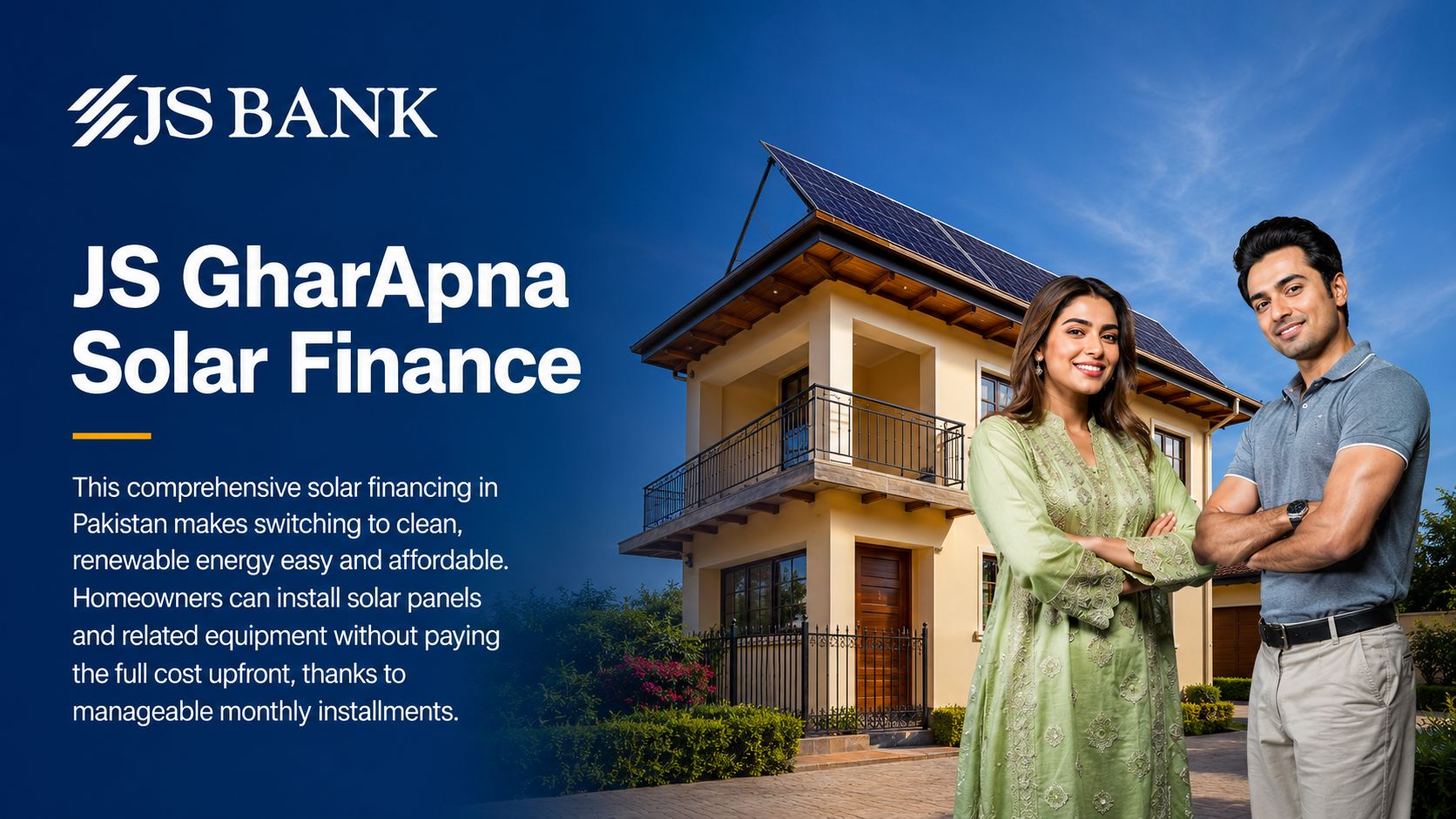
Discover how solar financing solutions can help homeowners adopt solar power for homes while making renewable energy more affordable in Pakistan.
Key Takeaways
- Solar power for homes helps reduce electricity bills and increase energy independence
- Pakistan’s high sunlight availability makes solar energy a practical long-term solution
- High upfront costs can be managed through structured solar financing options
- Financing enables homeowners to install systems and repay through affordable EMIs
- JS Bank solar financing solutions support easier access to residential solar adoption
- Solar energy offers long-term savings, sustainability, and improved property value
Rising electricity costs and increasing awareness about sustainability are encouraging more homeowners to explore alternative energy solutions. For many families, investing in solar power for homes offers an opportunity to reduce dependence on conventional electricity while benefiting from a cleaner and more reliable source of energy.
Although the initial installation cost of solar technology can be significant, financing options have made it easier for households to adopt renewable energy without placing a large burden on their savings. With structured financing solutions, homeowners can gradually invest in energy independence while managing their monthly budgets more effectively, including options like JS Apna Ghar Solar Finance.
Why Solar Energy Is Becoming More Popular
Pakistan receives abundant sunlight throughout the year, making solar energy a practical option for residential properties. As electricity demand continues to grow and utility costs fluctuate, many households are looking for ways to improve long-term energy efficiency.
A modern solar power system converts sunlight into electricity through photovoltaic panels installed on rooftops or open spaces. These systems can help homeowners generate a substantial portion of their daily electricity needs while reducing reliance on the national grid.
Some of the key advantages include:
- Lower monthly electricity expenses
- Reduced dependence on conventional power sources
- Environmentally friendly energy production
- Long-term savings on utility costs
- Increased property value through sustainable upgrades
These benefits have contributed to the growing adoption of residential solar solutions across the country.
The Rise of Renewable Energy in Pakistan
The global shift toward cleaner energy sources is also influencing local markets. Governments, businesses, and consumers are increasingly investing in sustainable technologies that help reduce carbon emissions and strengthen energy security.
The growth of renewable energy pakistan initiatives reflects this transition, with solar energy emerging as one of the most accessible options for residential users. Pakistan’s solar expansion has accelerated rapidly, reaching an estimated 51 GW of total solar deployment by 2026, driven largely by residential and distributed systems. In addition, solar installations now contribute significantly to national electricity supply, covering nearly 46% of daytime grid electricity demand during peak periods due to widespread rooftop adoption.
Favorable weather conditions, offering around 5.3 to 6.5 kWh/m²/day of solar irradiance, and continuous technological improvements have made solar installations more efficient and affordable than ever before.
As awareness grows, many homeowners are viewing solar not just as an environmental choice but also as a practical financial decision.
Overcoming the Cost Barrier
One of the main challenges associated with adopting solar technology is the upfront investment required for equipment and installation. Depending on system size and household requirements, initial costs can be substantial.
Financing solutions help address this challenge by allowing homeowners to spread payments over a fixed period instead of making a single large investment.
A typical financing arrangement may support expenses related to:
- Solar panels
- Inverters
- Installation services
- Mounting structures
- Associated electrical equipment
By reducing the initial financial burden, these solutions make clean energy more accessible to a broader range of households.
How Solar Financing Supports Homeowners
Dedicated financing products have become an important part of Pakistan’s transition toward sustainable energy adoption. A structured solar loan in Pakistan enables eligible customers to install solar systems while managing repayment through affordable installments.
Rather than postponing installation due to budget constraints, homeowners can begin benefiting from solar energy immediately while gradually paying for the system over time.
Some potential advantages include:
- Reduced upfront capital requirements
- Predictable monthly payments
- Easier household budget management
- Access to quality solar installations
- Long-term savings through reduced electricity bills
This approach allows families to balance affordability with long-term financial planning.
The Role of Banks in Promoting Sustainable Energy
Financial institutions play an important role in encouraging environmentally responsible investments. Many banks now offer specialized products designed to support homeowners who want to adopt renewable technologies.
Through programs for solar financing in Pakistan, banks work with customers to provide structured funding options that align with their financial capacity and energy needs. These facilities contribute to broader sustainability goals while helping households reduce energy costs.
Rather than functioning solely as lenders, banks are increasingly supporting the transition toward cleaner energy by facilitating access to modern infrastructure and technology.
Choosing the Right Solar Solution
Before investing in a residential solar setup, homeowners should carefully evaluate their energy requirements and available installation space.
Factors to consider include:
- Average monthly electricity consumption
- Rooftop size and sunlight exposure
- Future energy requirements
- Equipment quality and warranty coverage
- Installation expertise and maintenance support
A properly designed system can maximize energy production while ensuring long-term operational efficiency.
Consulting qualified professionals and comparing available financing options can also help homeowners make more informed decisions.
How Financial Institutions Are Supporting Residential Solar Adoption
As demand for sustainable energy solutions grows, many financial institutions have expanded their product offerings to support residential solar installations. Several banks in Pakistan now provide financing facilities specifically designed to help customers adopt rooftop solar technology without significant upfront costs.
JS Bank offers a solar solution financing program aimed at helping eligible homeowners finance the installation of residential solar systems through structured repayment plans.
Key Features of the Financing Program:
- Financing amount ranging from PKR 300,000 to PKR 7,000,000
- Repayment through Equal Monthly Installments (EMIs)
- Flexible tenor of 3 to 7 years
- Processing fee & charges as per Bank’s updated Schedule of Charges (SOC)
- Collateral requirement including:
- Hypothecation of energy solution (through JS Bank authorized vendors)
- Personal guarantee
- Post-dated cheques
- Equity contribution:
- Minimum 20% for financing up to PKR 6,000,000
- Minimum 30% for financing up to PKR 7,000,000
- Markup rates:
- 1-year KIBOR + 2.5% for salaried individuals
- 1-year KIBOR + 3% for self-employed individuals
- Optional fixed markup: 12.49% (up to 3 years, T&Cs apply)
- Mandatory energy solution insurance for the solar system
Similar initiatives reflect the growing role of the banking sector in supporting clean energy adoption while promoting greater financial accessibility.
These financing options help bridge the gap between the initial investment and the long-term savings that solar energy can provide.
Final Thoughts
The growing popularity of solar energy reflects a broader shift toward sustainability, cost efficiency, and energy independence.
By reducing upfront expenses and offering manageable repayment structures by banks such as JS Bank, these programs enable more families to invest in cleaner energy without disrupting their financial plans.
As technology continues to evolve and awareness increases, solar power for homes is likely to become an even more practical solution for households seeking long-term savings and environmental responsibility.
FAQs
1. What are the benefits of installing a home solar system?
A home solar system can help reduce electricity bills, lower dependence on the grid, and provide a cleaner source of energy.
2. How does solar financing work?
Solar financing allows homeowners to install solar equipment by paying for it through structured installments instead of making a large upfront payment.
3. Is solar energy suitable for homes in Pakistan?
Yes. Pakistan’s climate provides abundant sunlight, making solar energy an effective option for many residential properties.
4. Can financing make solar installations more affordable?
Yes. Financing solutions help spread installation costs over time, making it easier for homeowners to adopt solar technology while managing their budgets.
5. What factors should be considered before installing a home solar system?
Before installation, homeowners should consider their electricity usage, roof space, sunlight exposure, system size, and budget to ensure the solar solution meets their long-term energy needs efficiently.
6. How is a home solar system maintained after installation?
Home solar systems require minimal maintenance, such as regular cleaning of solar panels, periodic inspections, and ensuring that inverters and wiring are functioning properly for optimal performance.
7. How much can homeowners save with solar energy?
Savings depend on system size and electricity consumption, but many homeowners can significantly reduce their monthly electricity bills by generating their own renewable energy through solar power.
8. How can financing support solar adoption through JS Bank?
Financing solutions like JS Bank Ghar Apna Solution make solar installation more affordable by allowing homeowners to pay in easy installments instead of bearing the full upfront cost, making clean energy more accessible.